

Best places to photograph in Moscow, Russia
Moscow is a city where monumentality and detail coexist within the same scene. Between golden domes, red walls, Orthodox churches, and wide avenues, the Russian capital offers a rare photographic variety, especially in the early morning hours, when the cold light softens the grandeur of its historic buildings.
What makes Moscow special for photography
Moscow impresses with its scale. The Kremlin walls, the Orthodox cathedrals, the giant squares, and the monumental buildings create a constant sense of grandeur. At the same time, the city reveals many subtle photographic details: the golden glow of the domes, the religious mosaics, the reliefs on historic facades, and the reflections of snow or rain on the stone pavement.
The light in Moscow also has a very distinctive character. In winter, the short days produce soft and diffused lighting for much of the day, ideal for photographing architecture and textures. In summer, sunrise happens early and the so-called golden hour can last longer, favoring wide images of the Kremlin, Red Square, and the Orthodox churches.
Another important element is the visual contrast. Moscow mixes medieval constructions, Soviet monuments, and modern buildings within the same frame. This creates interesting compositions for those who like to work with depth, architectural lines, and different visual layers within the same photograph.
Main photographic settings and locations in Moscow
Kremlin and Cathedral of the Assumption
The interior of the Kremlin is one of the richest visual places in Moscow. In addition to the well-kept gardens and historic walls, the area concentrates some of the city's most important buildings. The Cathedral of the Assumption is one of the absolute highlights, with its golden domes and white facade marked by arches and religious details.
Photographically, the best approach is to explore the different angles between the cathedrals of the complex, taking advantage of the relationship between the buildings, the stone pavement, and the towers in the background. Wide-angle lenses work very well to highlight the grandeur of the place, while telephoto lenses allow you to isolate details of the domes, crosses, and architectural icons.
Red Square and Saint Basil's Cathedral
Red Square offers one of the most iconic urban scenes in Russia. On one side, Saint Basil's Cathedral draws attention with its irregular forms and colorful domes. On the other, the State Historical Museum reinforces the monumental character of the square with its red and symmetrical architecture.
At sunrise, the square is usually emptier, allowing for clean compositions with strong visual impact. On snowy days, the contrast between the white ground, the reddish buildings, and the colorful domes creates especially striking images. During the night, artificial lighting transforms the area and produces interesting reflections on the ground when it is wet.
Alexander Gardens
The Alexander Gardens work as a lighter transition between the architectural weight of the Kremlin and the openness of Red Square. Fountains, monuments, tree-lined paths, and organized flower beds offer good opportunities for compositions with depth.
In autumn, the trees take on golden and orange tones that pair very well with the red walls of the Kremlin in the background. In spring, the flowers and intense greenery soften the visual rigidity of the architecture, creating more delicate compositions.
Izmailovsky Market
Izmailovsky Market offers a different Moscow, more popular and colorful. The craft stalls, traditional Russian objects, matryoshkas, and patterned fabrics produce vibrant images full of texture.
It is an excellent location for documentary photography and detail shots. Instead of seeking only wide compositions, it is worth working with close-ups, capturing hands, faces, objects, and small visual fragments that convey the atmosphere of the place. The market also provides good spontaneous scenes with vendors and visitors.
Bolshoy Kamenny Bridge and Cathedral of Christ the Savior
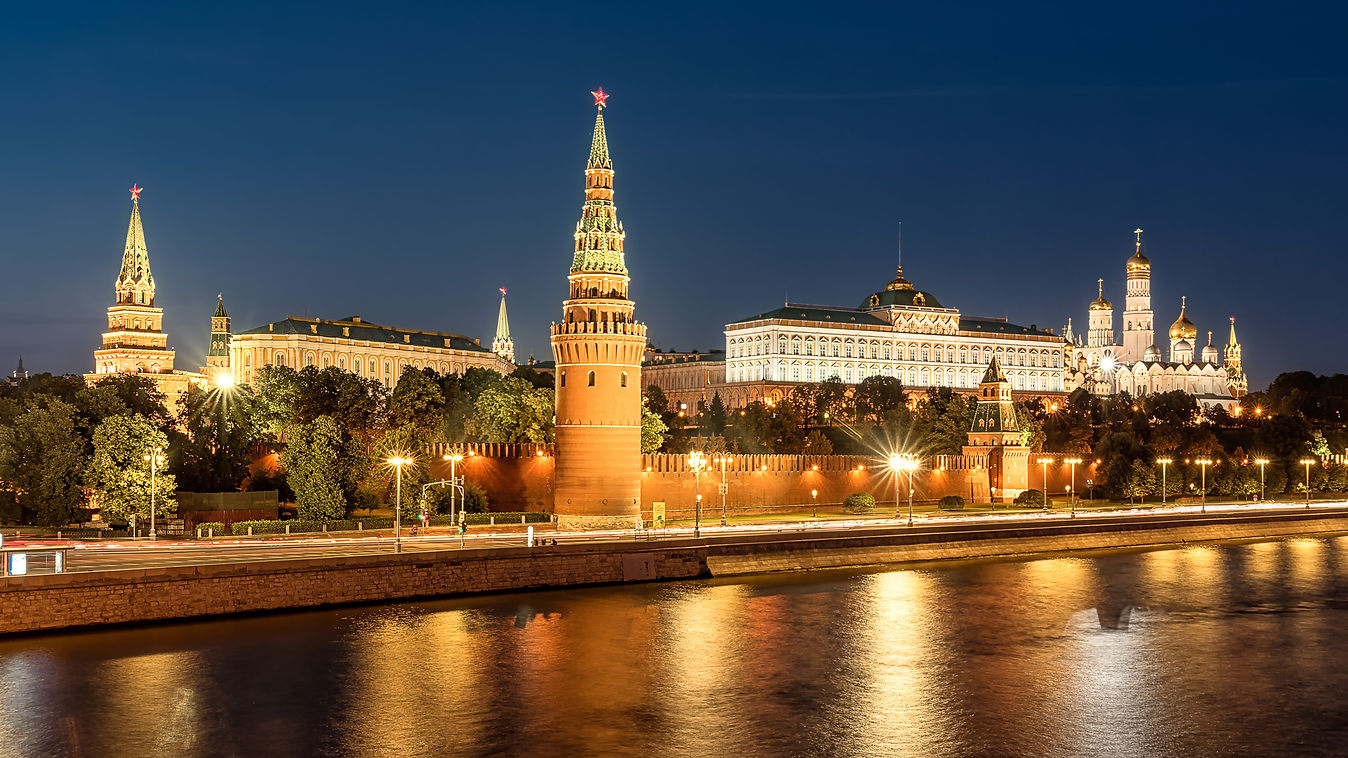
For those looking for the classic view of Moscow, Bolshoy Kamenny Bridge offers one of the best compositions in the city. From there, it is possible to photograph the Kremlin in perspective, with the walls, towers, and domes rising above the Moscow River.
On the opposite side, the Cathedral of Christ the Savior dominates the landscape with its gigantic proportions and golden domes. Late afternoon is usually the best time to photograph the area, when the side light highlights volumes and textures. At night, the lighting of the buildings reflected in the river creates a more dramatic and cinematic atmosphere.
Practical tips for photographing Moscow
The early morning hours are ideal for photographing Moscow's main tourist attractions with less movement and softer light. Red Square, for example, changes completely when it is empty, allowing for cleaner and more symmetrical compositions.
In winter, it is important to protect batteries and equipment, since low temperatures greatly reduce camera battery life. Thin gloves that allow you to operate buttons and controls help a lot during long periods outdoors.
For architecture photography, a lens between 16 mm and 35 mm is usually the most useful. For details of domes, sculptures, and facades, a short telephoto lens can make a difference. Tripods are especially useful in night photography, especially near Bolshoy Kamenny Bridge and the Cathedral of Christ the Savior.
In terms of composition, it is worth exploring strong lines, symmetries, and central framing, which work very well in Moscow's monumental architecture. It is also interesting to include people in the scenes to reinforce the scale of the buildings and convey the grand dimension of the city.


